What It's Really Like to Move to Lisbon as a Foreigner (Honest Pros + Cons)
The unfiltered version: what surprises people after the honeymoon phase, what's easier than expected, what's harder, and how to settle in emotionally - not just logistically.
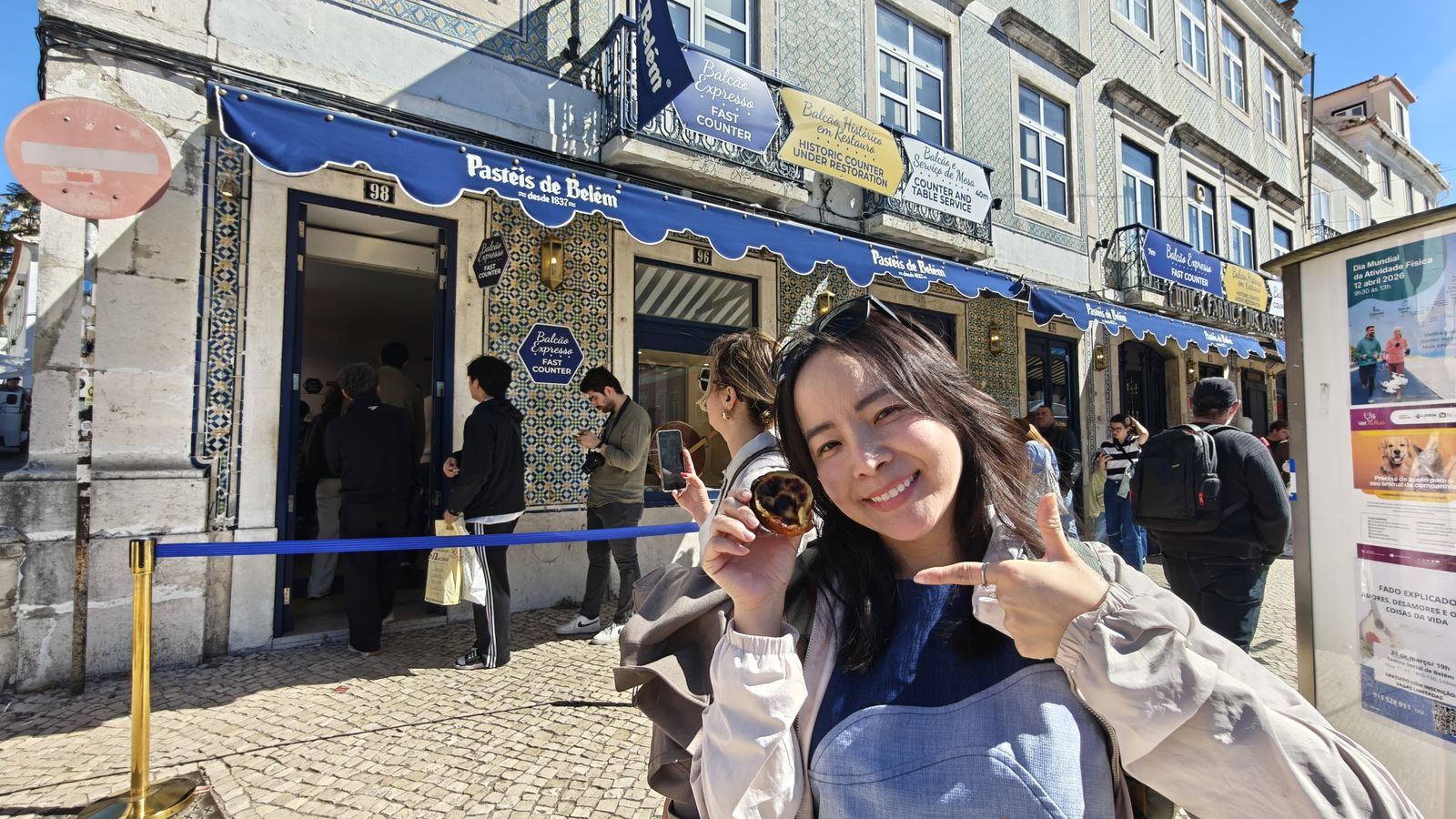
Jolie Dang
Founder, Jolie in Lisbon
I'm a Vietnamese woman who moved to Lisbon after years of living in other cities. I've now been here long enough to have moved through the honeymoon phase, the difficult middle, and into something that feels like genuine home. This is the honest account - the parts that felt like magic and the parts that were genuinely hard - written for the person who's thinking seriously about making the same move.
Phase 1: The honeymoon (months 1–3)
The first thing I remember about arriving in Lisbon is the light. It's a different quality of light from anywhere else I've lived - golden, warm, bouncing off white limestone facades and the river. On my first morning, I sat at an outdoor café in Príncipe Real with an espresso that cost €0.90 and watched the city wake up and thought: how is this real?
The early months are genuinely intoxicating. The food is better than you expect - even cheap neighbourhood restaurants serve good fresh fish, simple preparations done well, ingredients that taste like they grew somewhere real. The pastéis de nata. The ginjinha. The bacalhau in approximately 365 forms. You eat out constantly because it's good and it's affordable and you feel like you're living inside a food programme.
The city itself is small enough to feel human. You can walk from Chiado to Alfama to Mouraria to Intendente in an afternoon. The miradouros (viewpoints) are genuinely breathtaking - Portas do Sol at sunset, São Pedro de Alcântara on a clear day, the Santa Justa lift looking over the rooftops. You spend a lot of time walking and not feeling like you need to get anywhere in particular.
And the weather. Coming from a city where grey sky is the default setting, the sunshine feels like a physical gift. You can sit outside in February. There are jasmine-scented streets in spring. The summers are long and hot and the entire country seems to orient towards the sea.
In this phase, the difficulties feel minor. The bureaucracy is an adventure. The language barrier is charming. The hills are a workout. This period is real - don't dismiss it as naïve - but it doesn't last forever.
Phase 2: The adjustment (months 3–6)
Somewhere around month three, the novelty softens and the actual work of building a life begins to show itself. This is when the bureaucratic frustrations start to land differently. What felt like a minor adventure when you were still in tourist mode feels genuinely frustrating when you're trying to get something done.
AIMA appointments take months. The bank is complicated. The landlord is slow to fix the broken boiler. You spend an afternoon at a government office and leave with a form you need to return with different documents. You try to explain something to customer service and the call gets dropped. You miss the efficiency of systems you used to take for granted.
This is also when you start to notice the things you miss from wherever you came from. For me it was food - Vietnamese food specifically, but also the specific food culture of the city I'd left. Lisbon has improved enormously in international food variety, but there are gaps. I missed the particular energy of certain cities. I missed my people.
The Portuguese social culture becomes more complex in this phase too. Portuguese people are warm and generous in hospitality contexts - if you're invited into someone's home, you'll be fed magnificently and made to feel completely welcome. But building closer friendships takes time in a way that can be confusing if you're used to the faster, more superficially open social culture of some other countries. Friendships deepen slowly here. It can feel like you're meeting lots of people but not really connecting with any of them.
I had a genuinely difficult couple of months around the four-to-five month mark. I was between flats, waiting on bureaucracy, missing certain people intensely, and wondering if I'd made the right call. This is normal. Almost every person I've spoken to who's made an international move describes a version of this period.
Phase 3: Integration (months 6–18 and beyond)
Something shifts, usually gradually rather than all at once. You start having regulars - the guy at the coffee kiosk near your flat who nods when he sees you coming and starts making your order. The woman at the pharmacy who asks how your cold is doing. The neighbours who remember your name.
You stop navigating the city and start knowing it. You have opinions about which neighbourhood has the best pastelaria, which miradouro to avoid on Saturdays (all of them - go on Tuesday morning), which café has the best lunch menu. You know which tram to take and which one to avoid at rush hour. You know the market schedule and the best time to queue at the post office.
You have friends. Probably mostly expats in the first instance - an inevitable reality of arriving in a new place - but hopefully some locals too, built through language exchanges, sports clubs, co-working spaces, or simply the slow accumulation of time and repeated encounters. Friendships here are worth the wait; Portuguese friendships tend to be loyal and deep once they form.
The bureaucracy becomes a background annoyance rather than a source of crisis. You've navigated enough of the system to know how it works and what to expect. You've built buffer time into everything. You've stopped being surprised that things take twice as long as quoted.
And Lisbon stops being a city you're experiencing and starts being the city where you live. That's a different thing.
What surprised me most
How different the social culture is
Portuguese people are not unfriendly - quite the opposite. But the social code is different from what I was used to. In some cultures, a conversation at a party means you're acquaintances. Here, that same conversation might happen multiple times before anyone suggests plans. Friendships develop over time, through repeated contact, and are taken seriously once they form. Understanding this - that slowness isn't indifference - changed my experience considerably.
How good the food quality is even at cheap restaurants
A €10 lunch in Lisbon is genuinely good food. Fresh fish, proper vegetables, made that day. It's not a compromise or a fast food substitute. The baseline quality of food at ordinary restaurants is significantly higher than in most northern European or North American cities at equivalent prices. This never stops surprising me.
How safe it genuinely is
I walk home alone at 2am and don't think about it. I leave my laptop on a café table when I use the bathroom. Friends leave bags on chairs in restaurants. This level of casual, unremarkable safety is remarkable to people from cities where this would be unthinkable. It took me months to fully trust it and then longer to stop noticing it as a thing. Now it's just the baseline and I find myself mildly anxious when I visit other cities.
That the language barrier feels real even when everyone speaks English
Even with English being widely spoken, there's a constant low-level friction when you can't speak the local language. Conversations stay slightly shallower. Jokes don't quite land. You feel slightly outside things that you can't fully articulate. Learning Portuguese - even imperfect Portuguese - eliminated this in ways I didn't anticipate. Even speaking badly changes the quality of your interactions.
Things that are genuinely better than where I came from
- Safety - unambiguously and significantly better. Lisbon is one of the safest cities in Europe by crime statistics, and it feels like it.
- Weather - 300 days of sunshine per year is not just a statistic. It changes your mood, your habits, and your relationship with the outdoors in ways that are hard to overstate.
- Food quality and price - excellent baseline quality at every price point. Eating well in Lisbon doesn't require spending much.
- Healthcare cost - even with private insurance, healthcare costs are a fraction of what they are in the US and often lower than UK private rates.
- Access to nature - within 30–45 minutes of the city centre you can be on an Atlantic beach, in a forested national park, or hiking along dramatic coastal cliffs. The nature access is extraordinary for a capital city.
- Work-life balance culture - working culture in Portugal is generally more humane than in Northern European or North American corporate environments. Lunch actually happens. People leave at a reasonable time. Relationships matter in professional contexts. (This is a generalisation and varies by sector, but the cultural baseline is more balanced.)
- Walkability - despite the hills, Lisbon is a fundamentally walkable city. Daily errands without a car are genuinely possible in most central areas.
Things that are genuinely harder
- Bureaucracy - I keep saying this because it keeps being true. Residency processes, tax registration, bank accounts, health centre registration - all of these involve more time and frustration than equivalent processes in Northern Europe or North America. Build patience and buffer time into everything.
- Housing costs relative to quality - Lisbon rents have risen significantly in recent years. What you pay for a one-bedroom apartment would get you significantly more space in many other European cities. The buildings are often beautiful, but insulation, heating, and maintenance standards vary wildly.
- Winter dampness and cold indoors - mild outdoors but often cold and damp inside apartments with no central heating. Buying space heaters immediately is not optional.
- Salaries if working locally - Portuguese salaries are among the lowest in Western Europe for equivalent professional roles. If you're earning locally, the math around "Lisbon is cheap" becomes more complicated.
- Customer service and wait times - things take longer. Repairs take longer. Customer service calls take longer. Waiting lists at government offices are longer. This is a genuine friction of daily life that you adapt to but never entirely stop noticing.
- Internet reliability in older buildings - NOS and MEO are the main providers and coverage is generally good, but older buildings can have infrastructure issues. Always check actual speeds before committing to a flat if you work from home.
Practical emotional advice for the first year
- Join communities early and actively. The first month feels too early and too busy to think about social life. Do it anyway. Attend the language exchange meetup when you don't feel like it. Introduce yourself at the co-working space. The connections you make in month two become your support network in month five.
- Learn Portuguese even before you feel like you "need" it. Start Language Transfer on your first week. Order your first coffee in Portuguese even if the response is in English. The language compounds over time and the social dividends arrive faster than you expect.
- Build neighbourhood routines early. A regular café. A preferred supermarket. A weekly market. A walk that becomes yours. These routines create the feeling of belonging faster than any other single thing. Belonging to a neighbourhood is the first step to belonging to a city.
- Give it at least a year before deciding it's not for you. The adjustment curve is real. Month five is not a reliable indicator of what month fourteen will feel like. Every person I know who seriously struggled in months three to six is now settled and happy. The people who left early sometimes came back, and sometimes didn't, and the difference often correlated with whether they pushed through the middle.
- Be honest about what you need and advocate for it. If you need more income, remote work or supplementary freelancing is worth pursuing - don't wait until you're financially stressed. If you need certain foods or community, go find them - Lisbon has Vietnamese supermarkets, a Brazilian community, a thriving Southeast Asian food scene. You don't have to assimilate completely to integrate.
Would I do it again?
Without question. Not because Lisbon is perfect - it isn't - but because the quality of daily life here, once settled, is genuinely exceptional. The light, the food, the safety, the pace, the sea. The way that even a difficult Tuesday in Lisbon involves a good espresso, a kind interaction in a bakery, and a view of the Tagus if you turn down the right street.
Moving countries is hard. Building a life somewhere new is slow. But this particular city rewards the effort in ways that make the effort feel worth it. Give it a real chance - not a tourist chance, but a resident chance - and most people find the same thing.
FAQ
How long does it take to feel at home in Lisbon?
Most honest accounts say 12–18 months for genuine settling. The first 6 months are a mix of excitement and friction. Months 6–12 are usually when things start clicking into place - you have a social circle, routines, and systems that work. By month 18, most people who've stayed are unambiguously glad they did.
Is Lisbon welcoming to foreigners?
Generally yes. Lisbon has a long history of international contact and a large expat community. As a Vietnamese person, I've experienced very little hostility - certainly less than in some Northern European cities I've lived in. There's a well-established Southeast Asian community in Lisbon too, and the food, community, and social connections are there if you look for them.
What's the hardest thing about moving to Lisbon that nobody mentions?
The middle months - when the honeymoon is over, the bureaucracy is stalled, and you haven't yet built the social network that makes the city feel like home. It's not dramatic enough to write about in a relocation blog post, but it's the period that requires the most mental resilience. Knowing it's coming and that it's temporary makes it significantly easier to navigate.
You would also like
How to Get a Portugal D7 Visa (Step by Step)
A practical, high-level D7 visa roadmap: who it?s for, the typical steps, key documents, and common delays?so you can plan your timeline realistically.
Lisbon Expat Guide: Healthcare, Housing, and Daily Life (Practical Basics)
A practical expat starter guide for Lisbon: how housing really works, the basics of healthcare, and day-to-day life tips that make you feel local faster.

Learning Portuguese in Lisbon: What Actually Works (Without Burning Out)
A realistic approach to learning Portuguese in Lisbon: what to focus on first, how to practice daily, and how to get results even if everyone speaks English.
Ready to explore Lisbon?
Download my complete Portugal Travel Planner with insider tips, neighborhood guides, restaurant recommendations, and practical checklists for your Lisbon adventure.
Download Free Planner