Learning Portuguese in Lisbon: What Actually Works (Without Burning Out)
A realistic approach to learning Portuguese in Lisbon: what to focus on first, how to practice daily, and how to get results even if everyone speaks English.
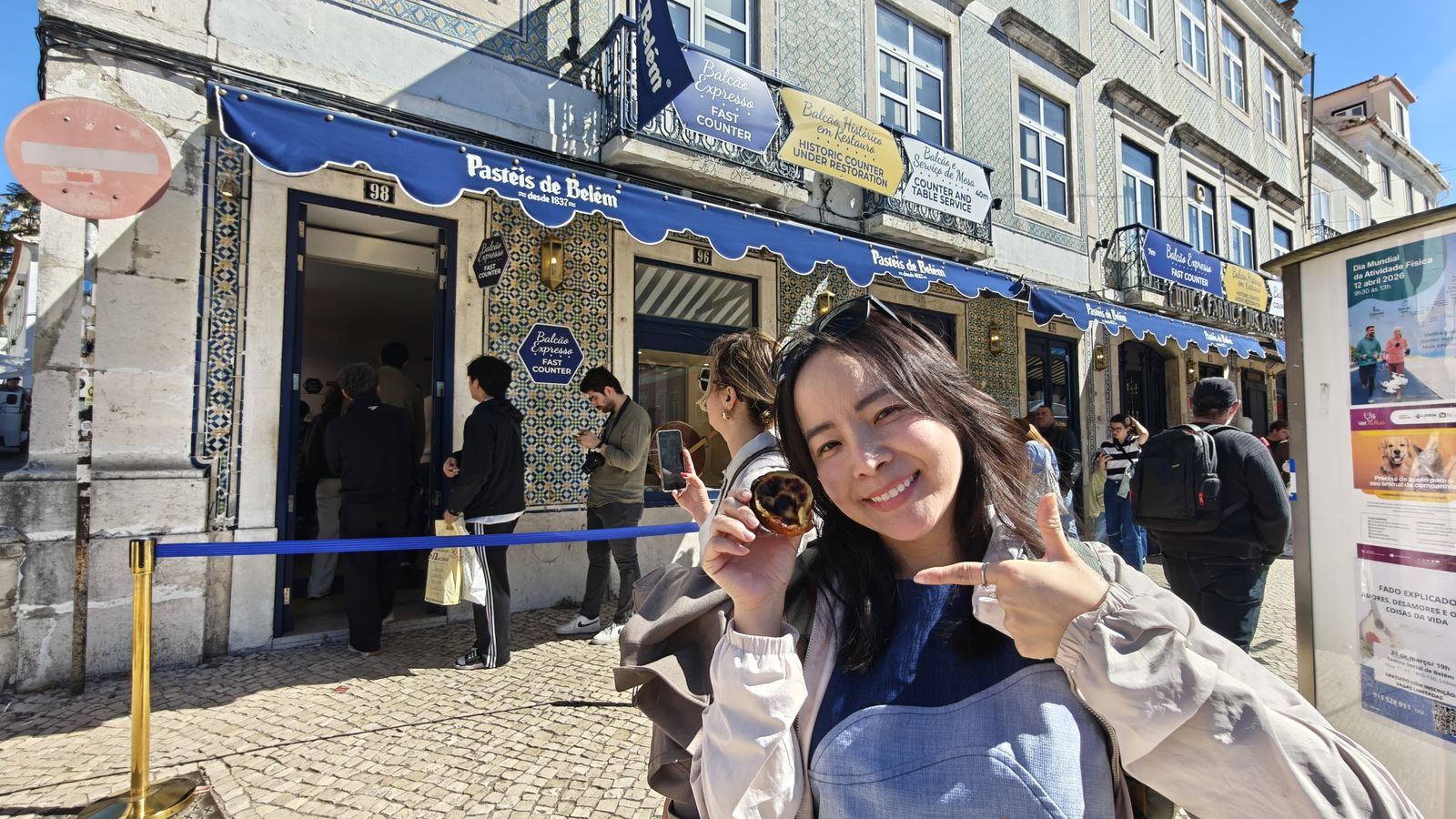
Jolie Dang
Founder, Jolie in Lisbon
You don't need Portuguese to survive in Lisbon. English is widely spoken, especially in central areas, restaurants, and shops with tourist traffic. But here's what nobody tells you upfront: learning Portuguese doesn't just make life easier - it fundamentally changes your experience of living here. It's the difference between being a permanent tourist and actually belonging somewhere.
The honest truth about English in Lisbon
I want to be clear about something: you can absolutely live in Lisbon without speaking a word of Portuguese. In Chiado, Príncipe Real, and most tourist areas, English is the default language with many shopkeepers and restaurant staff. Many expats have been here for years and never gotten past café-level Portuguese.
But there are real limits. At government offices (Finanças, AIMA, health centres), your dealings become significantly harder without Portuguese. Older residents and many service providers outside tourist areas often don't speak English. And there's an intangible thing that happens when you start speaking Portuguese - even badly - where Portuguese people open up in a completely different way. The warmth is real but it's partly gated behind the language.
I started learning seriously about three months after arriving. I wish I'd started immediately.
What makes Portuguese genuinely hard
European Portuguese (the variety spoken in Portugal, as opposed to Brazilian Portuguese) is notoriously difficult for English speakers, and honestly, it's hard for Spanish speakers too. Here's what will trip you up:
- Nasal vowels. The -ão ending (as in "não' - no, or 'obrigação' - obligation) doesn't exist in most languages and is hard to produce naturally. It's somewhere between "owng' and 'owm' and you'll get it wrong many times before it sticks.
- Vowel reduction. European Portuguese drops and reduces unstressed vowels in ways that can make words almost unrecognisable from how they're spelled. "Para' (for/to) sounds closer to 'pra' in fast speech. 'Obrigado' sounds like "brigadu". The gap between written and spoken Portuguese is large.
- Speed and swallowed sounds. Portuguese speakers in Portugal speak fast and swallow syllables. Brazilian Portuguese is much more open and clear. If you've been learning from Brazilian content, spoken European Portuguese will feel like a different language at first.
- Subjunctive mood. Used far more frequently than in English, and necessary quite quickly in real conversation. It takes a while to internalise when to use it.
None of this means it's impossible - it just means you shouldn't be too hard on yourself when you feel like you're not progressing as fast as you expected.
What's easier than people think
The difficulty gets overstated. Portuguese has real advantages for English speakers:
- Cognates everywhere. Huge swathes of vocabulary are recognisably similar to English and Spanish. "Importante", "comunicação", "hospital", "natural", "possível' - if you can read a page of Portuguese text, you can probably get the gist even before you've studied much.
- Grammar is logical. Yes, there are verb conjugations and gendered nouns, but the rules are consistent once you learn them. Unlike English, there are relatively few arbitrary exceptions.
- People appreciate the effort enormously. Even stumbling through a few sentences in Portuguese will generate a warmth from locals that is genuinely motivating.
Free resources worth using
Language Transfer Portuguese
This is my strongest recommendation for absolute beginners. Language Transfer is a free course (45 lessons, available at languagetransfer.org) that teaches European Portuguese through a Socratic method - the presenter prompts you to work out grammar rules rather than just memorising them. It's excellent for understanding how the language is constructed. I did all 45 lessons in about three weeks, 20–30 minutes a day, mostly on walks. It gave me a proper foundation that Duolingo never could.
Duolingo
Good for vocabulary and building a daily habit. The gamification works for some people and the streaks create accountability. The major limitation is that Duolingo teaches Brazilian Portuguese, not European Portuguese, so pronunciation guidance is off. Use it for vocabulary and reading, not for pronunciation or listening comprehension.
YouTube channels
"Portuguese With Leo' and 'Practice Portuguese' are both solid free resources specifically for European Portuguese. Practice Portuguese in particular has excellent audio examples of real spoken European Portuguese, which is invaluable for training your ear to the actual sounds you'll hear in Lisbon.
Anki
Spaced repetition flashcards are unglamorous but effective for vocabulary. You can download pre-made Portuguese decks or build your own from words you encounter in daily life. 15 minutes a day of Anki is more effective than a two-hour session once a week.
Paid resources worth the money
iTalki or Preply tutors
Once you have a basic foundation (a few weeks of Language Transfer plus some vocab), conversation practice with a real tutor accelerates progress dramatically. On iTalki, community tutors (non-certified but often excellent) charge€15–25/hour, while professional teachers charge €25–40/hour. I do two sessions a week with a tutor in Porto who I found through iTalki, and it's the single biggest accelerator in my learning. One hour of real conversation practice beats five hours of app use.
Pimsleur
Pimsleur is an audio-based programme (around €15/month) that's excellent if you do a lot of walking or commuting. It's specifically designed for listening and speaking rather than reading and writing, which makes it a good complement to more text-heavy methods. The European Portuguese version is available and the pronunciation modelling is accurate.
Language schools in Lisbon
If you prefer structured learning in a classroom environment, Lisbon has several good options:
- CIAL Centro de Línguas - one of the most established language schools in Lisbon, centrally located, offers group and individual classes. Group classes typically run €200–300/month. Good quality, well organised, and they run intensive courses if you want to make fast initial progress.
- Portuguese Lab - smaller, more boutique, with a reputation for engaging teaching. Good option if you find large classes uninspiring or want a more personalised approach.
- Instituto Camões - the official Portuguese cultural institute runs lower-cost classes but can have waitlists. Worth checking if budget is a primary concern.
The embarrassing phase everyone goes through
Here's something I want to prepare you for, because it's almost universal and genuinely demoralising if you're not expecting it: when you speak Portuguese to people in Lisbon, especially in shops, restaurants, and cafés that deal with tourists, they will often switch to English the moment they hear an accent.
This is not rudeness. It's efficiency - they want to help you effectively and English is faster for them. But it kills your practice opportunities. The way I handled this:
- Stick to Portuguese anyway. Say something like "prefiro falar em português" (I prefer to speak in Portuguese). Most people will switch back, even if a little surprised.
- Build regularity with specific places. The bakery near my flat, my regular café, the pharmacy I always use - these people now know me, know I'm learning, and engage with me in Portuguese by default. Regularity builds relationships that create practice space.
- Go where tourists don't. In Campo de Ourique, Alvalade, and other residential neighbourhoods, far fewer people speak English. You'll have no choice but to try.
Conversation practice outside of tutors
Beyond one-on-one tutors, there are real community options for conversation practice in Lisbon:
- Language exchange meetups. Meetup.com has several regular Lisbon language exchange groups where Portuguese speakers who want to practise English meet English speakers who want to practise Portuguese. These are free, social, and a genuinely good way to make friends while learning. Search "language exchange Lisboa" on Meetup.
- Tandem app. Matches you with language exchange partners remotely. Good for when you want to practise but can't get to a meetup.
- Order in Portuguese at cafés. Every café visit is a low-stakes opportunity. "Um café, por favor" is the beginning of a habit. Graduate to "pode trazer a conta?' (can you bring the bill?) and 'tem almoço hoje?' (do you have lunch today?). These small interactions add up.
How long does it realistically take?
The honest answer, based on my experience and talking to other expats who've been through this: with consistent daily practice of 30–45 minutes, you can reach basic conversational level - ordering food confidently, handling simple transactions, understanding partial replies - in about 3–6 months.
Reaching comfortable general conversation (where you can chat with neighbours, follow TV shows, and navigate bureaucracy without stress) takes most people 12–18 months of sustained effort. Fluency is a multi-year project.
What I've noticed is that the biggest factor isn't which resource you use - it's consistency. Twenty minutes every single day beats two hours on Saturday. Build it into a routine (morning coffee, commute, lunchtime walk) and it stops feeling like study.
Key phrases that actually matter for daily life in Lisbon
- Um café, por favor - a coffee, please (this is an espresso; a galão is closer to a latte)
- Pode repetir, por favor? - can you repeat that, please?
- Fala mais devagar, por favor - please speak more slowly
- Não percebi - I didn't understand
- Quanto custa? - how much does it cost?
- Onde é a paragem do autocarro? - where is the bus stop?
- Pode chamar um táxi/Uber? - can you call a taxi/Uber?
- Preciso de ajuda - I need help
- Obrigado/Obrigada - thank you (obrigado if you're male, obrigada if female)
- Com licença - excuse me (when passing someone or getting attention)
- Desculpe - sorry / excuse me (when apologising)
- Tenho uma marcação - I have an appointment
FAQ
Do I need Portuguese to live in Lisbon?
You can survive without it - English is widely spoken in central areas, shops, and most expat-facing services. But "survive' and 'thrive' are different things. For government offices, health centres, and deeper connection with the city, Portuguese makes a significant difference. And beyond the practical: learning even basic Portuguese signals that you're trying, and that changes how people treat you in ways that are hard to quantify but very real.
Should I learn Brazilian Portuguese or European Portuguese?
European Portuguese if you're living in Portugal. The differences go beyond accent - vocabulary, pronunciation, and some grammar constructions differ meaningfully. Brazilian content is often more available and easier to find online, but if your goal is to speak with people in Lisbon, European Portuguese is worth learning specifically. Language Transfer Portuguese and Practice Portuguese (YouTube) are both explicitly European.
Is it worth paying for a language school over self-study?
Depends on your learning style. If you need accountability and social learning, a school is worth it. If you're self-directed, Language Transfer + an iTalki tutor + daily practice in local cafés can match or beat classroom results for less money. The most important thing is consistency, not the method.
You would also like
How to Get a Portugal D7 Visa (Step by Step)
A practical, high-level D7 visa roadmap: who it?s for, the typical steps, key documents, and common delays?so you can plan your timeline realistically.

What It?s Really Like to Move to Lisbon as a Foreigner (Honest Pros + Cons)
The unfiltered version: what surprises people after the honeymoon phase, what?s easier than expected, what?s harder, and how to settle in emotionally?not just logistically.

Lisbon Expat Guide: Healthcare, Housing, and Daily Life (Practical Basics)
A practical expat starter guide for Lisbon: how housing really works, the basics of healthcare, and day-to-day life tips that make you feel local faster.
Ready to explore Lisbon?
Download my complete Portugal Travel Planner with insider tips, neighborhood guides, restaurant recommendations, and practical checklists for your Lisbon adventure.
Download Free Planner